Lockers, safes and locks
Self-service locker banks for voluntary off-site storage, plus home safes and cable locks with prevention-focused inserts. Owner-controlled access on all three.

SafeReach builds the voluntary storage infrastructure that prevention programs keep referring to and rarely have: connected lockers and safes, the training that surrounds them, and the de-identified reporting that shows your funder it worked.
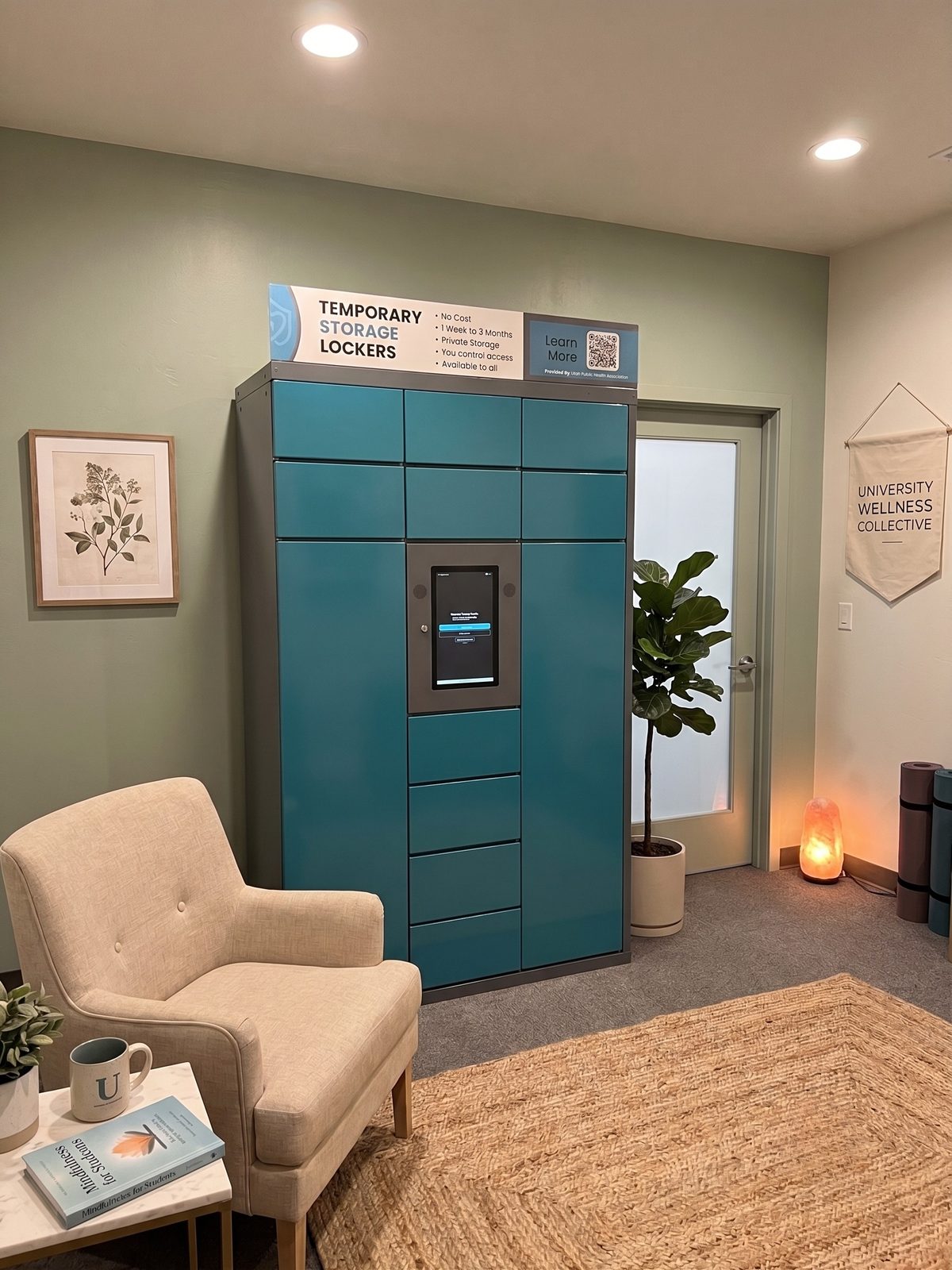
Temporary storage lockers — university wellness centre installation
Lethal means counseling works by putting time and distance between a person in crisis and a firearm. But the counseling ends with a recommendation, and the recommendation ends at the front door. Off-site storage is scarce, custody transfer is legally fraught, and asking a gun owner to hand their property to an institution is the fastest way to end the conversation.
SafeReach removes the transfer. The owner keeps sole access the entire time. No custody, no paperwork, no record, no report to anyone. The institution provides the infrastructure and sees only de-identified program data.
A suicidal crisis is frequently brief, and most people who survive an attempt do not go on to die by suicide — which is why access, not intent, is the variable worth changing.
Hardware alone is a locker. What makes it prevention infrastructure is everything attached to it — the training that gets it used, the data that proves it worked, and the public resources that make it findable.
Self-service locker banks for voluntary off-site storage, plus home safes and cable locks with prevention-focused inserts. Owner-controlled access on all three.
Locked & Loved for the public, the SAFE Pillar Series for community pillars across prevention, crisis and postvention, and Secure Storage Partner Training for host organizations.
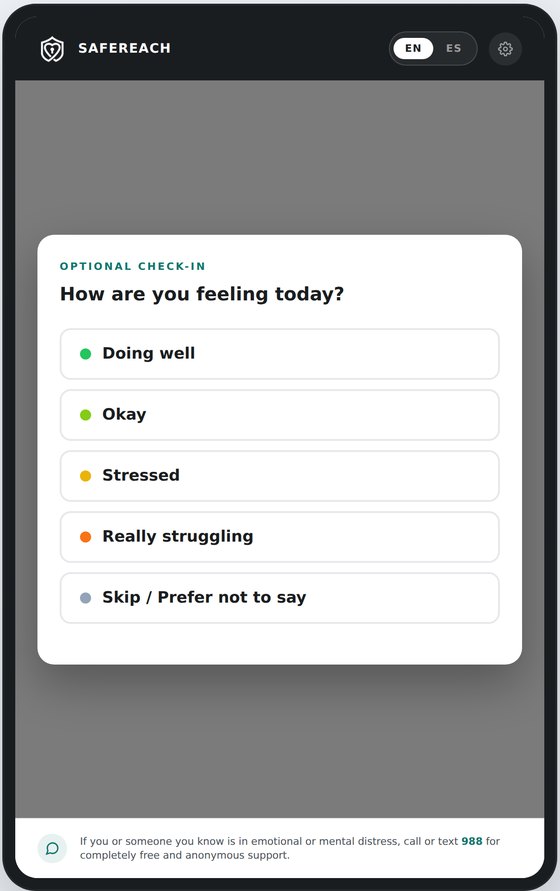
A 988 footer sits on every kiosk screen. Optional, anonymous check-in surveys ask how someone is doing at intake, at each access, and at close-out. Nothing is mandatory and nothing is tied to a name.
If you or someone you know is in emotional or mental distress, call or text 988 — free, confidential, 24/7. Veterans press 1.
De-identified storage events, duration trends, locker utilization and aggregated survey responses, delivered as reports your program officer and your funder can both read.
safestorageutah.org and timeanddistance.org were not commissioned and not paid for. We built them because the resources did not exist, and they are free to everyone.
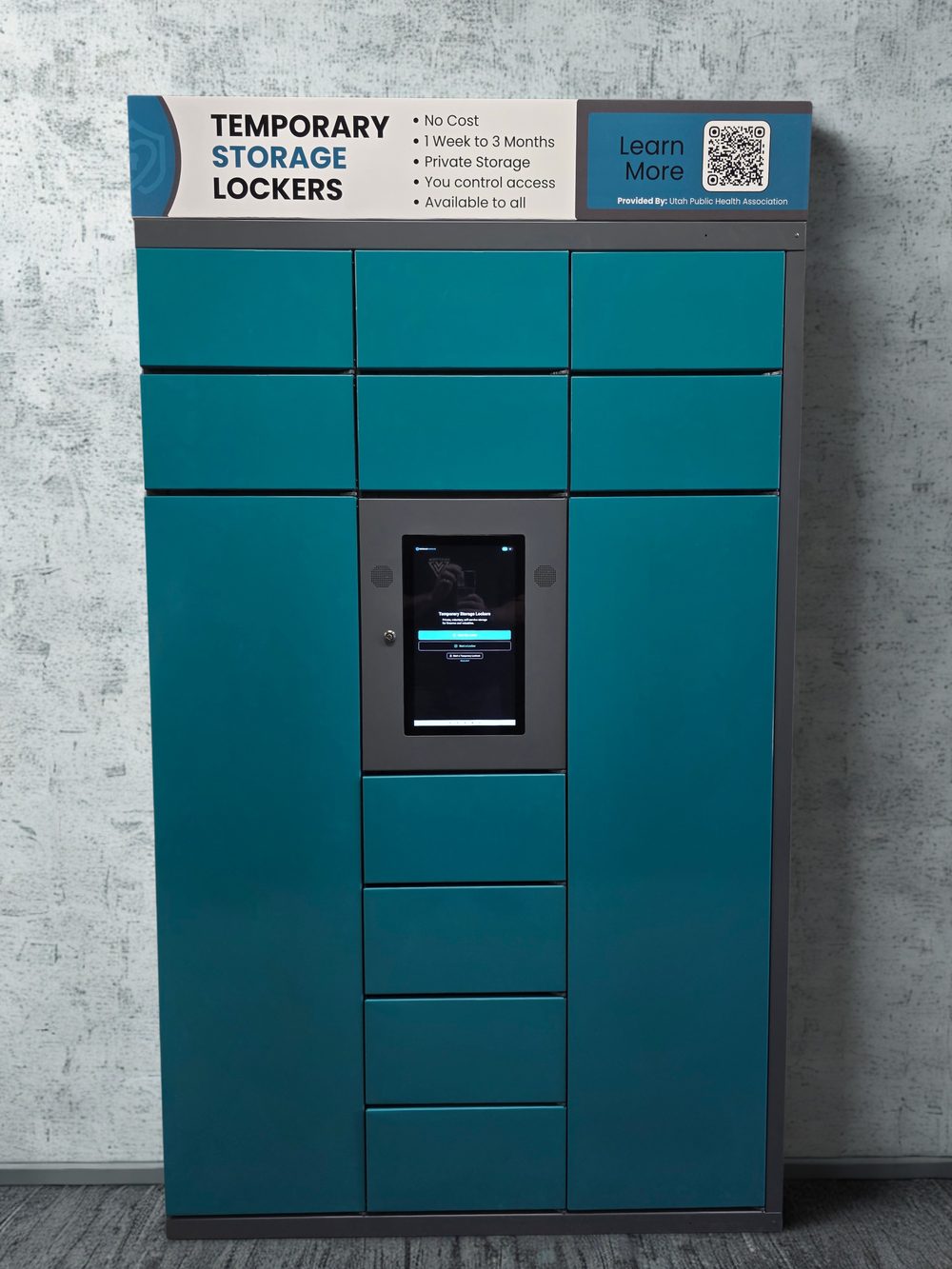 76" H
48" W
76" H
48" W
Standard configuration
76" H × 48" W × 21" D
10 × small locker — 8" H × 15" W × 20" D
2 × rifle locker — 55" H × 15" W × 20" D
Steel, individually secured, anchored, made in the USA
The user sets a private credential from their own phone number and a PIN they choose. Only they can open the locker under routine circumstances. The host takes no possession, custody or control.
Because nothing changes hands, there is no transfer, no command notification, no law enforcement contact and no disciplinary or medical record.
Registration asks only for legally required information. Every screen is written so the kiosk is never the hard part.
Make, model and serial number are never collected. Ownership is not verified, so a person can also store a friend's or family member's firearm during a crisis.
Locker mix and sizes, reporting, siting, signage and agreement language are scoped with your organization. Prevention work is collaborative.
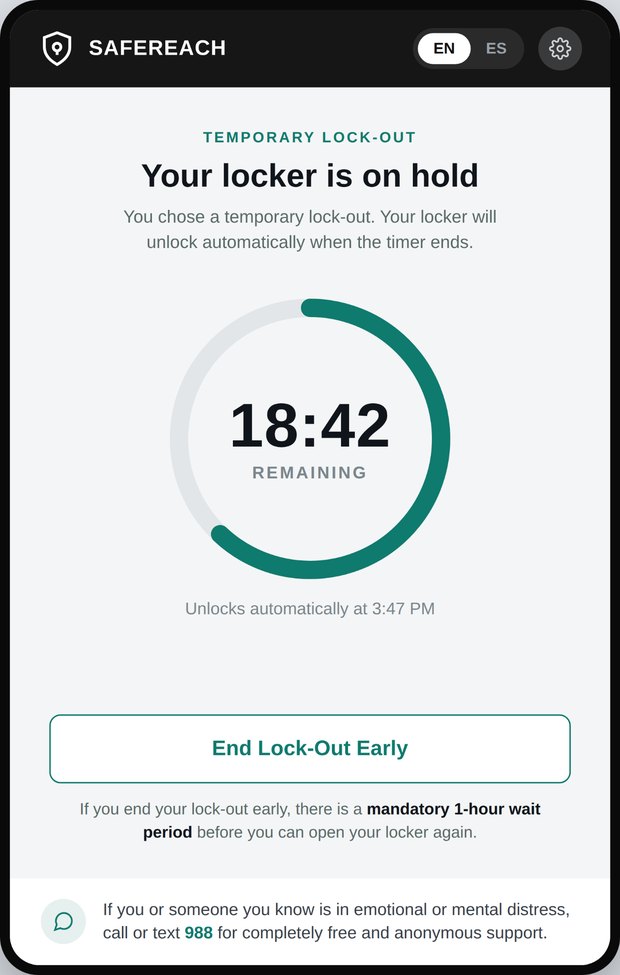
A self-imposed waiting period, chosen by the user, during a moment when they judge it would help. Nothing about it involves staff, and nothing about it is imposed.
The person chooses the hold themselves. The host cannot impose one.
The locker reopens on its own when the timer expires. No staff involved, no request to make, nobody to explain yourself to.
Ending a lock-out early still triggers a mandatory one-hour wait — the minutes that matter most.
Consistent with the rest of the system. Nobody else gains the ability to open the locker at any point.
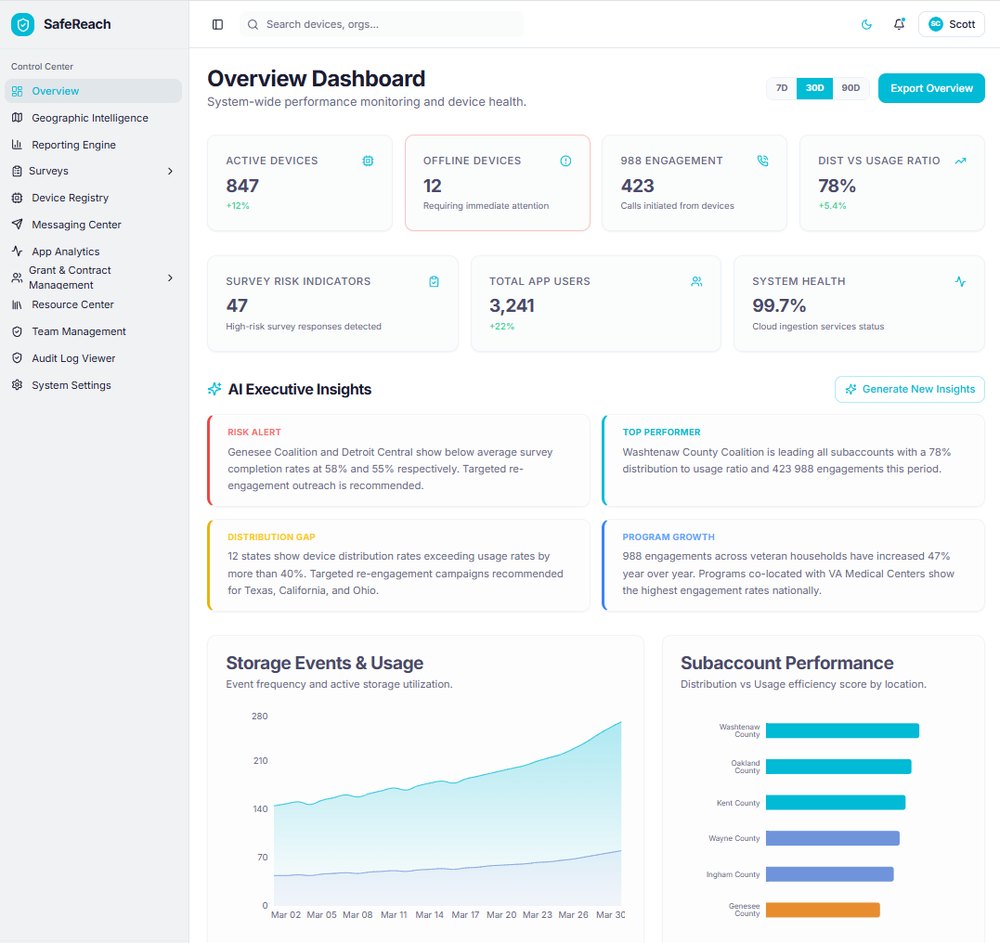
All partner-facing data is aggregated and de-identified. Information is released only where mandated by law.
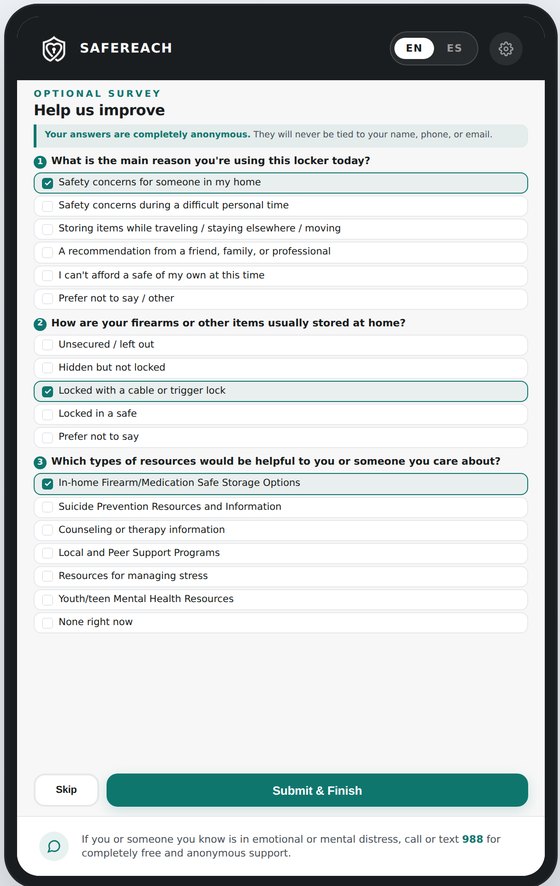
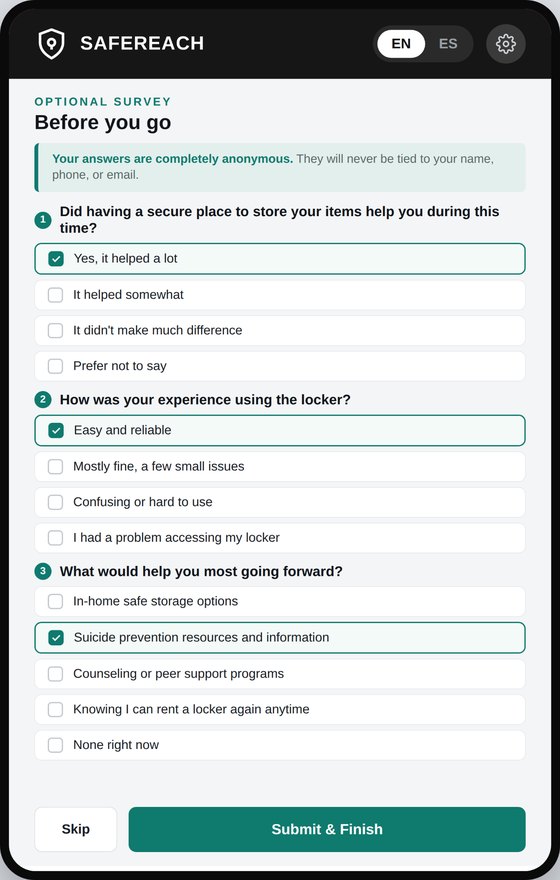
Three optional, anonymous touchpoints. They tell you why people are using the system, how they are doing while they use it, and what would have helped more.
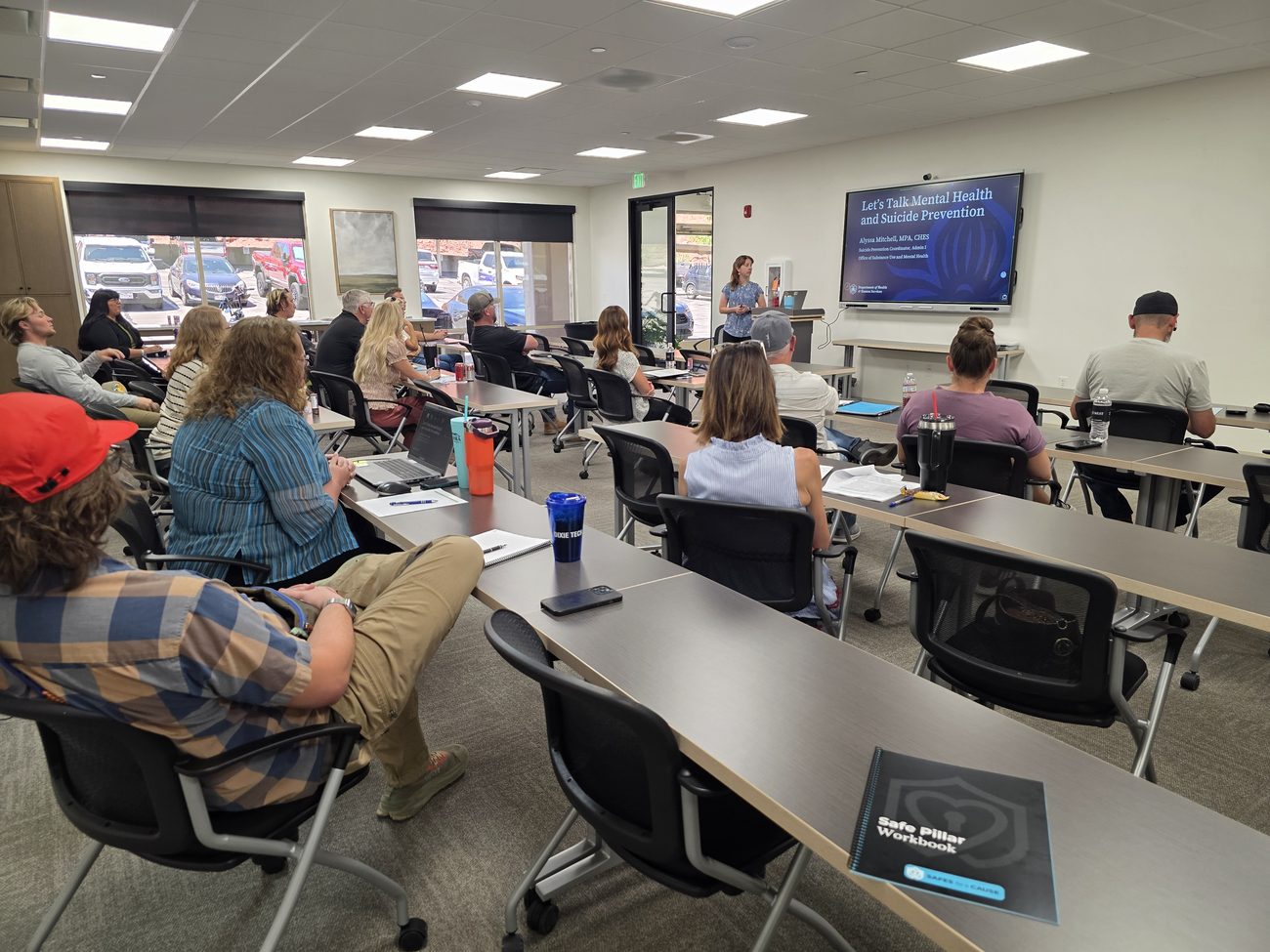
Our curricula have been delivered well beyond the firearm community — from home builders to victim advocates to a room of 200 business owners — by people with years of experience training large groups.
Trains community pillars across all three phases: prevention, crisis and post-event — with a concrete action plan for each phase, adapted to the person's actual role.
Most gatekeeper training stops at recognizing risk and referring out. This carries through to what happens after, and gives each participant a plan they leave with.
Four-class series, or a condensed two-hour session.
Public-facing. Teaches the basics of secure storage to gun-owning households in language that respects ownership and does not lecture.
For host organizations. How to provide secure storage, how to talk about it without losing the room, and how to keep the offer standing after the grant cycle ends.
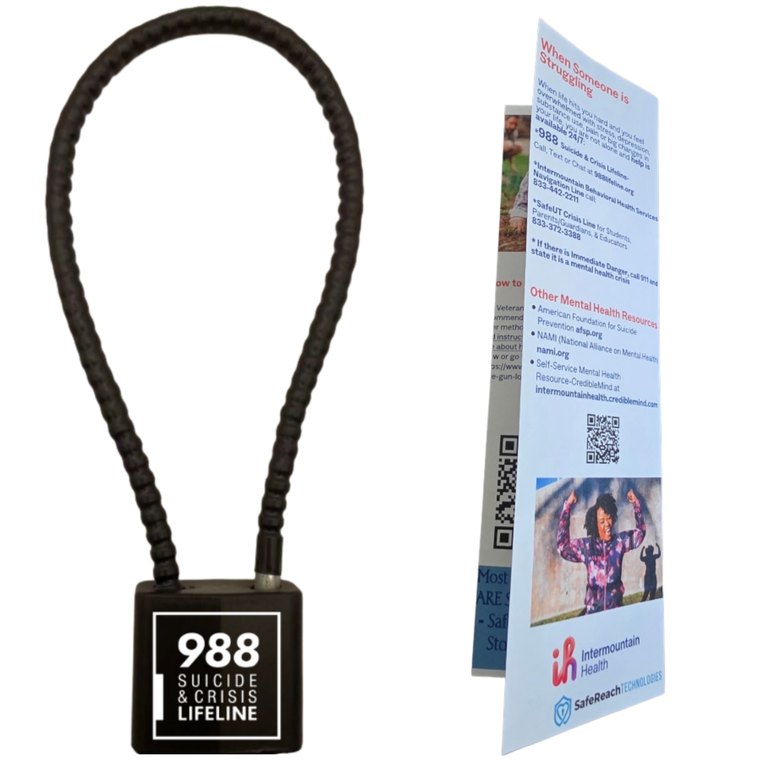
10,000 cable locks customized with 988 messaging, shipped with prevention-focused inserts we developed with Intermountain. Complete and delivered.
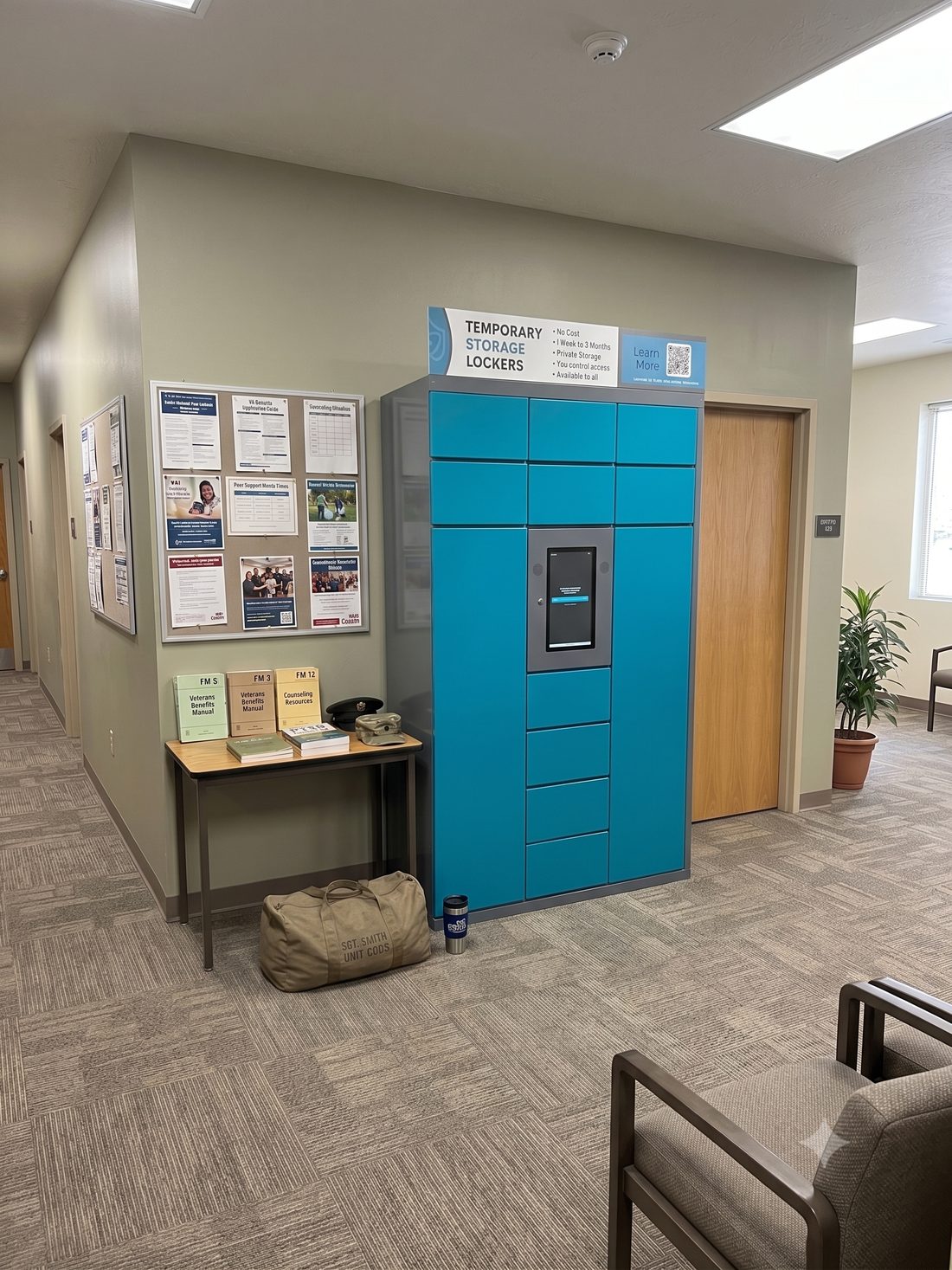
Locker systems placed in coordination with the Utah Public Health Association and the Utah Suicide Prevention Coalition and Committee.
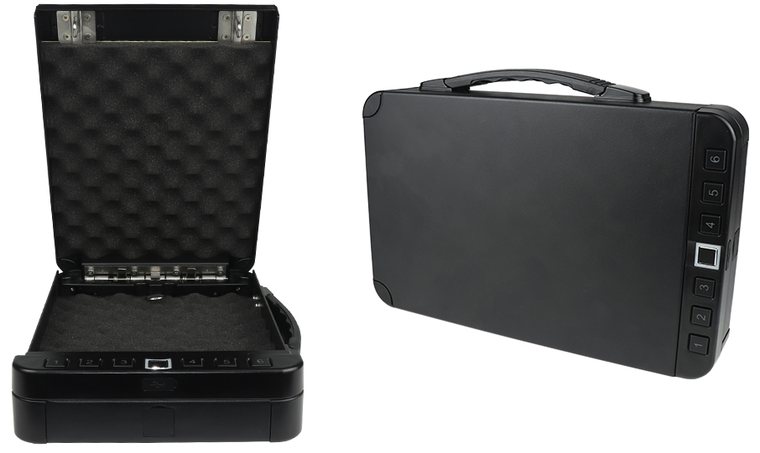
A vehicle safe with a companion app for securing firearms in vehicles, with reminders and responsible-ownership prompts. In development for Gun Safe Families.
Across government agencies, public health organizations, health systems and prevention organizations. We have been the supply side of other people's prevention programs for years, which is how we know what actually gets used and what sits in a storeroom.
The University of Colorado Anschutz, a leading center for military and veteran suicide prevention research, serves as our independent evaluator. Hold My Guns advises us on firearm-community trust.
Two barriers stop storage networks from existing: nobody knows who gets sued, and the money arrives once and disappears. We support legislation on both, and we will share our drafting and testimony work with any state that wants it.
The legal piece. Provides clear civil immunity to organizations that host voluntary, temporary firearm storage.
The funding piece. Creates a restricted account in Utah code, supported by an ongoing appropriation and used exclusively to purchase secure firearm storage equipment.
We hear that more than any other objection, and it is usually solvable. Most of our deployments are paid for out of funding the organization already had access to and had not connected to storage.
Pricing is scoped per deployment, because locker mix, siting and reporting vary. Tell us roughly what you are working with and we will get you a number you can put in a budget line.
Our competitive shooting team keeps us active in the firearm community. That is deliberate. Trust is the precondition for a real conversation about storage, and it is not earned from a conference room.
Sport shooting is genuinely good for people. We want the community to keep it, and we want responsible owners to know there is somewhere to go when life gets hard — without surrendering ownership, and without anyone making a record of it.
This is also why our messaging works for institutions. A program the firearm community rejects doesn't prevent anything, no matter how well funded it is.
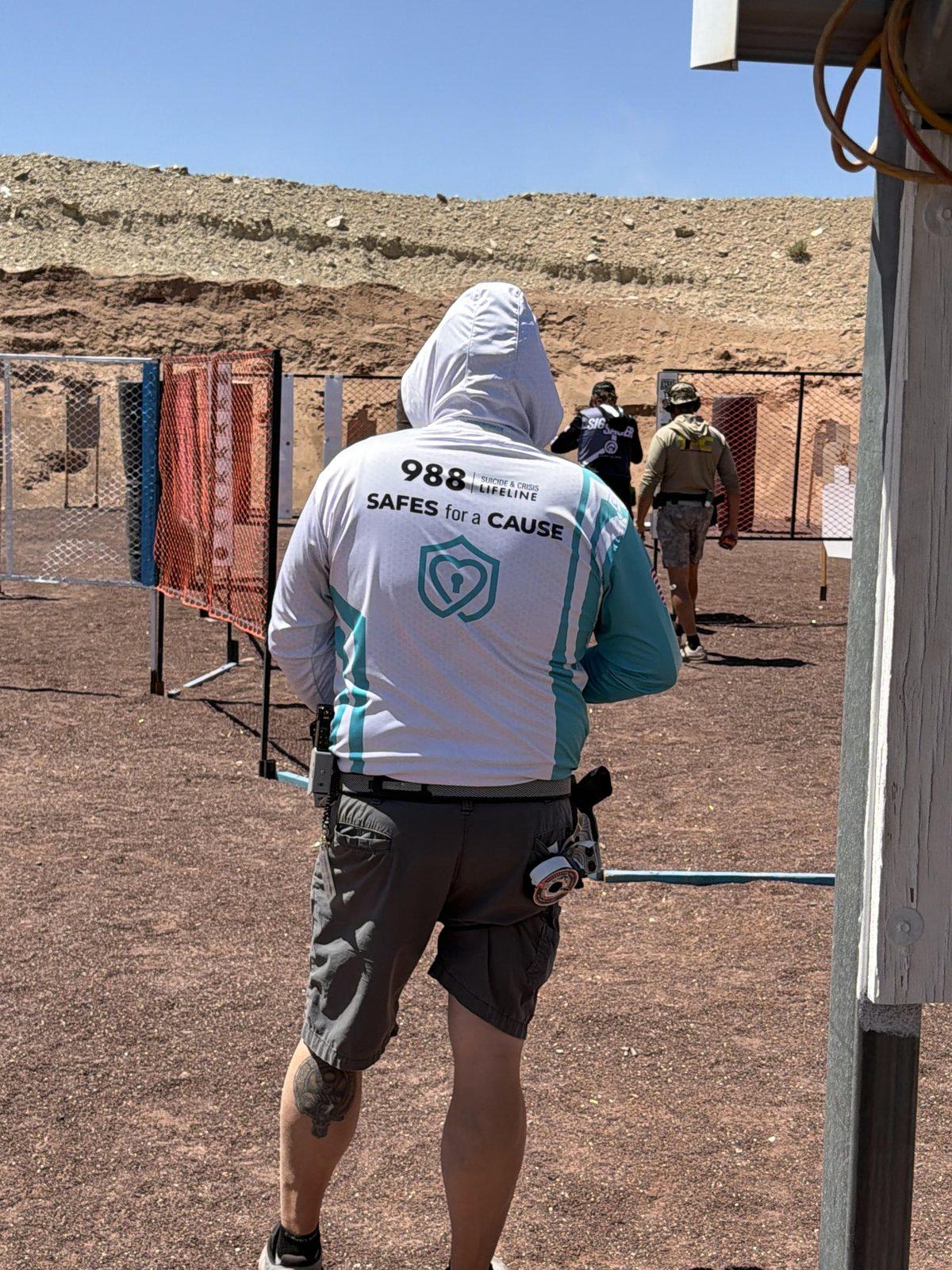
We're adding shooters to the team. If you compete, or you want to, and you care about where this conversation goes in the firearm community — get in touch. Sponsorship, match support, and a jersey that starts conversations at the range.
Neither was commissioned. Neither was paid for. Both are free to use, free to link, and free for your program to hand out.
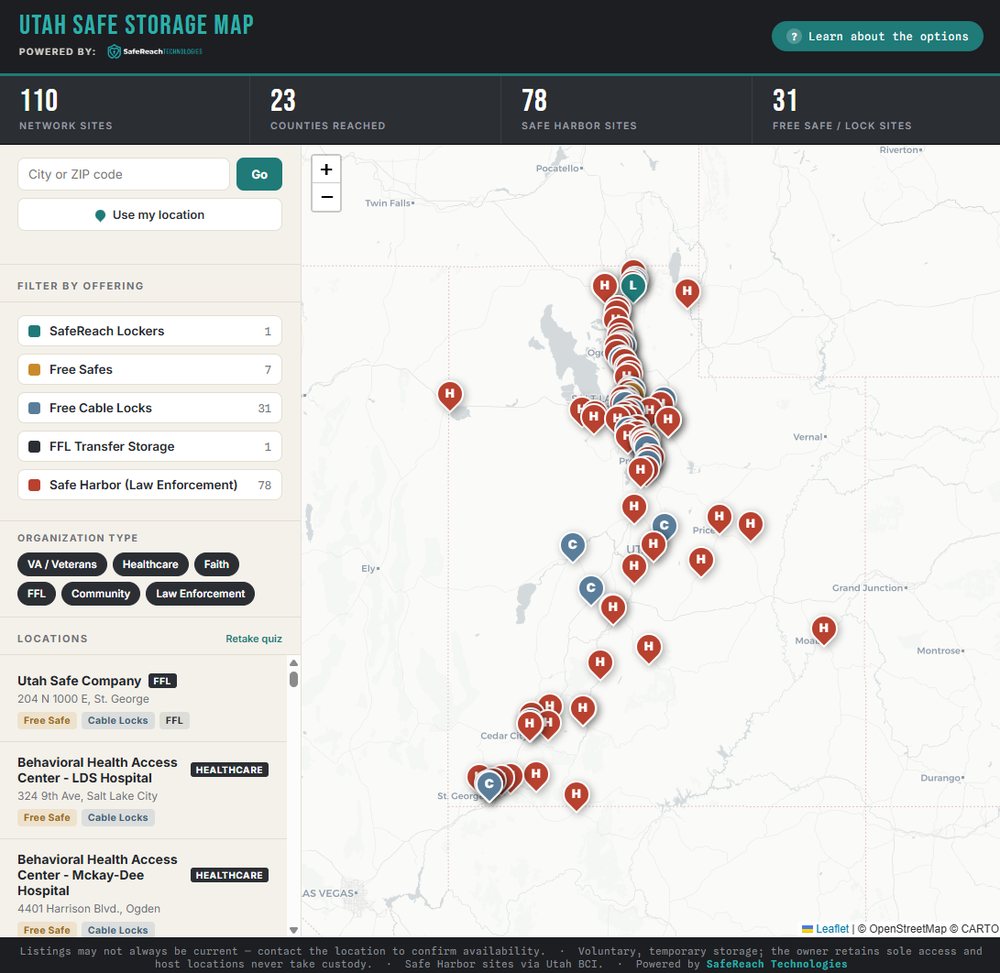
Where a person can actually store a firearm in Utah right now — lockers, free safes, free cable locks, FFL transfer storage and law-enforcement safe harbor sites, filterable by offering and organization type.
safestorageutah.org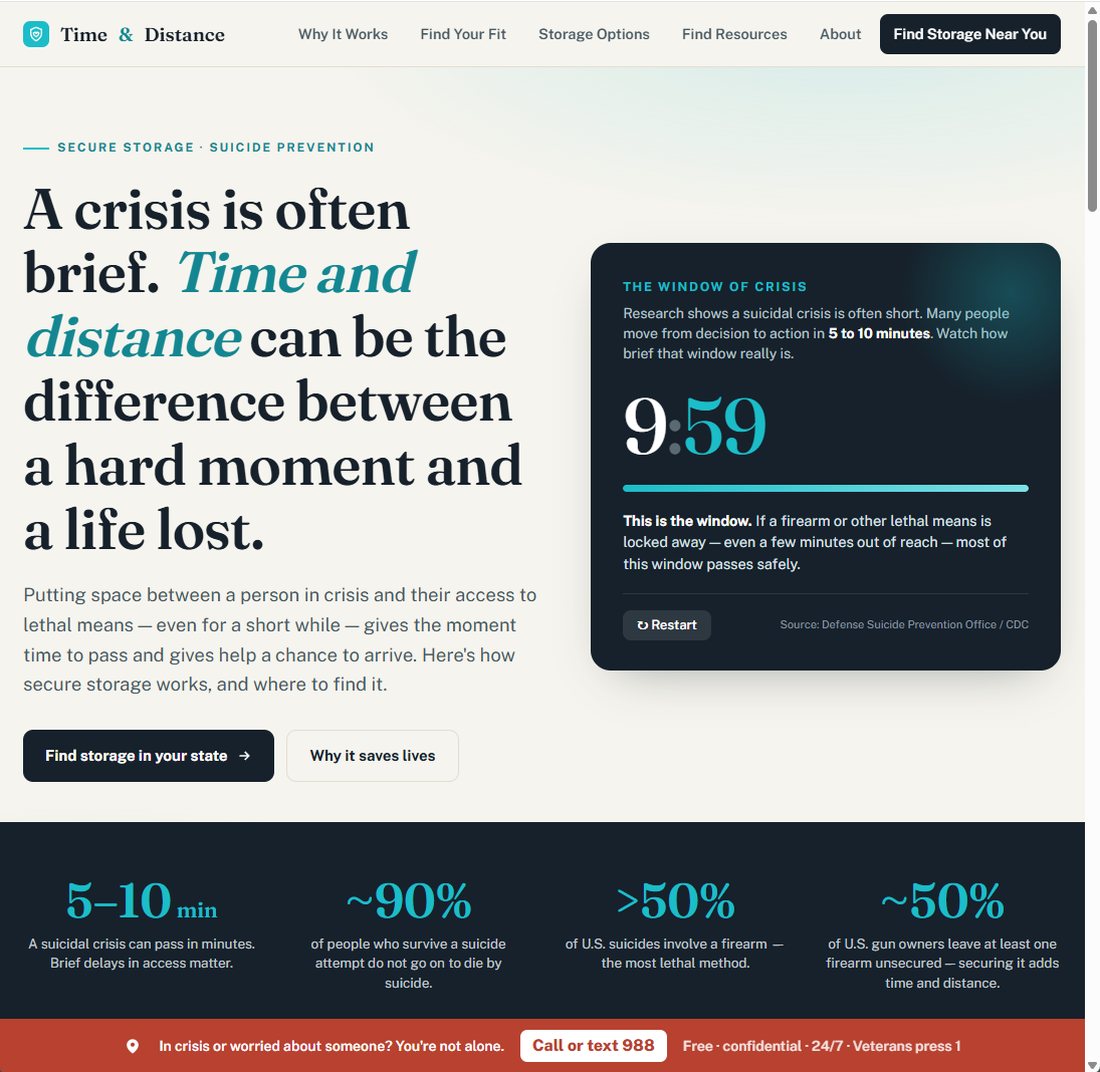
A plain-language explanation of why secure storage saves lives, written for gun owners rather than about them, with a state-by-state path to finding storage nearby.
timeanddistance.orgNo. The person storing the item sets a private credential using their own phone number and a PIN they choose, and they retain exclusive access for the entire rental period. The host location takes no possession, custody, or control, and has no routine ability to open a locker.
No. Because the renter retains exclusive access via PIN and the host never takes possession, ordinary rental activity does not constitute a transfer requiring ATF Form 4473. The one exception is abandonment: if a firearm is left unretrieved past the timeframes in the user agreement, a host Federal Firearms Licensee is required by federal regulation to log it into their records.
A rental record is created. It contains the renter's mobile phone number, a cryptographically hashed PIN that no one can read back, timestamps of when the locker was opened, the digitally signed user agreement, and, for firearm rentals only, a physical address collected so a host Federal Firearms Licensee can meet federal recordkeeping obligations if items are later abandoned. What ordinary use does not produce is a command notification, a law enforcement contact, or a disciplinary or medical record. Firearm make, model, and serial number are never collected, and host organizations receive only de-identified, aggregated data. Full detail is in our privacy policy.
Yes. Ownership is not verified, which means a person can store a friend's or family member's firearm during a crisis. That is often the exact situation where a few days of distance matters most.
Once a site is agreed, our installation team sets the unit into place, secures and anchors it, and brings it online. The unit is ready to use in minutes.
Locker systems are currently deployed in Utah, in coordination with the Utah Public Health Association and the Utah Suicide Prevention Coalition and Committee, with expansion underway. Safes and cable locks ship to partner organizations nationwide.
Lethal means safety, also called means restriction or means safety counseling, is the practice of putting time and distance between a person at risk and the method they would be most likely to use. It works because a suicidal crisis is frequently brief, and because method matters enormously to whether an attempt is survived. Secure storage is how the principle gets operationalized for firearms. The gap most programs run into is that counseling ends with a recommendation to store, and there is often nowhere specific to send the person. That is the gap we build for.
Most suicide prevention frameworks name lethal means safety as a core strategy, and most implementation teams can point to the training they have delivered but not to storage capacity they have created. A locker deployment turns a strategy line into countable infrastructure: a physical resource in a defined location, with usage and survey data attached. A persistent 988 footer appears on every kiosk screen, so the crisis line is present at the moment a person is already acting on their own safety.
Counseling changes intent to act. Storage capacity changes whether acting is possible. Programs trained in counseling on access to lethal means consistently report the same downstream problem: the conversation goes well, and then the patient has no practical option other than a friend's house or a safe they do not own. Providing a voluntary, non-punitive place to store closes that loop and gives your clinicians something concrete to offer at the end of the conversation.
Yes, and the mechanism is the same in both cases: making it easier for a person to voluntarily create distance from a firearm during a period of elevated risk. The majority of firearm deaths in the United States are suicides, so the two fields overlap more than the public conversation suggests. Because our system is voluntary, requires no custody transfer, involves no registry, and never asks anyone to surrender ownership, it can be adopted by programs across that conversation, including by the firearm-owning community itself, which is the population any effective program has to reach.
Yes. Campus deployments work well because the locker reads as a general-purpose voluntary storage resource rather than a firearm-specific intervention, which lowers the barrier both for a student to use it and for an institution to host it. Siting, signage, and agreement language are scoped with your campus, and the right placement depends on which department owns the resource.
Through the SafeReach Connect dashboard: storage events and duration trends, locker-size utilization, aggregated anonymous survey responses on why people came and whether it helped, and program reach and engagement by location. Optional check-in surveys run at intake, at each access, and at close-out, so you can report on outcomes rather than only on units deployed. We also supply program evaluation and reporting language that funders commonly ask for.
Pricing is scoped per deployment, because locker mix, siting, and reporting requirements vary. Deployments can be structured as a purchase or a lease depending on what your funding allows. Most of our deployments are paid for out of funding the organization already had access to and had not connected to storage, and our team will help identify grant opportunities and provide budget figures and scope language for an application.
A home safe puts a lock between a person and a firearm inside their own home. A temporary storage locker adds distance as well, because the firearm is stored off-site at a host location for a defined rental period, which is what the research points to during an acute crisis. We provide both, since different situations call for different tools and a program serving a whole community usually needs both.
Not a demo request and not a sales call. Tell us the population you serve and the constraint you're working under — budget, liability, campus politics, whatever it actually is — and we'll tell you honestly whether we can help.